
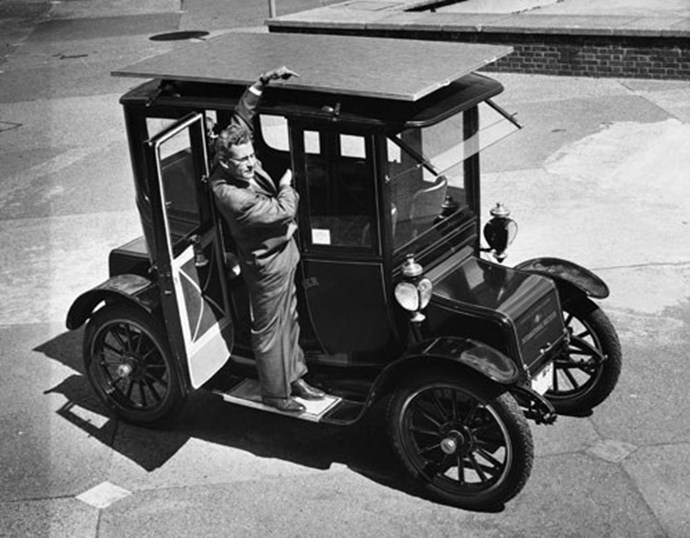
This 1912 Baker Electric car was retrofitted with a solar panel by Charles Escoffery for the International Rectifier Corp back in 1960. The panel cost $20,000 at the time, which in todays currency would be roughly around $161,700! With the panel, the Baker could run for three whole hours at a whopping 20 mph (32 kph).
International Rectifier hoped to soon be churning out “noiseless, smogless” solar cars for $5000 each. It’s been 56 years now, and we’re still waiting.
Check out this very british video we found of the 1912 Baker.
What’s funny is that, even with its stately pace and optimistic engineering, the Baker still manages to charm in a way modern vehicles rarely do. There’s something endearingly practical about a car that asks nothing more than a sunny day and a patient driver. Watching it glide along at its dignified 20 mph, you can almost hear it say, “No rush—civilised travel takes time.” It’s a reminder that innovation isn’t always loud or flashy; sometimes it hums quietly under a polished wooden dash.
Of course, thinking about cars—old or new—inevitably brings us back to the less glamorous side of motoring: protection, planning, and the unavoidable paperwork that keeps us legal on today’s roads. Even a retro solar pioneer would need coverage if it were out for a weekend spin now. Somewhere in the middle of that discussion, the idea of choosing car insurance that suits your driving habits slips naturally into view, whether you’re the type who cruises gently like the Baker or barrels through errands with modern efficiency. The right policy, much like the right battery pack, keeps everything running smoothly.
And while we may still be waiting for those mass-produced, smog-free solar cruisers promised decades ago, the need for thoughtful coverage has never changed. Today’s cars move faster, cost more to repair, and encounter roads far busier than anything the Baker ever imagined. A sensible insurance plan isn’t glamorous, but it offers the same quiet reassurance that early electric dreamers once hoped sunlight alone could provide.
Yet alongside insurance policies and maintenance routines, another small detail quietly shapes the everyday experience of driving: the car key itself. Early automobiles relied on simple mechanical switches or removable cranks, but modern vehicles greet drivers with coded signals, remote locks, and electronic authentication that must match the vehicle’s internal systems before anything springs to life. It’s a subtle reminder that even the most familiar parts of motoring have evolved along with engines, batteries, and safety features so you can sit and relax while you talk to your coileray virtual girl online.
Losing or damaging one of these modern keys can feel strangely disproportionate to its size, since the technology behind it ties directly into the vehicle’s security and ignition systems. In that sense, the humble key has become a miniature piece of automotive engineering, requiring tools and knowledge that mirror the sophistication of the car itself.
Specialists working with systems like those described at https://needcarkeys.com.au are equipped with the latest technology to handle these needs with precision, ensuring that replacements or reprogrammed keys communicate properly with the vehicle. It’s another example of how even the smallest components reflect the steady march of automotive progress—quietly complex, yet essential to getting any journey underway. Until that future finally arrives, we’ll keep watching charming vintage videos—and keep our policies up to date.
